
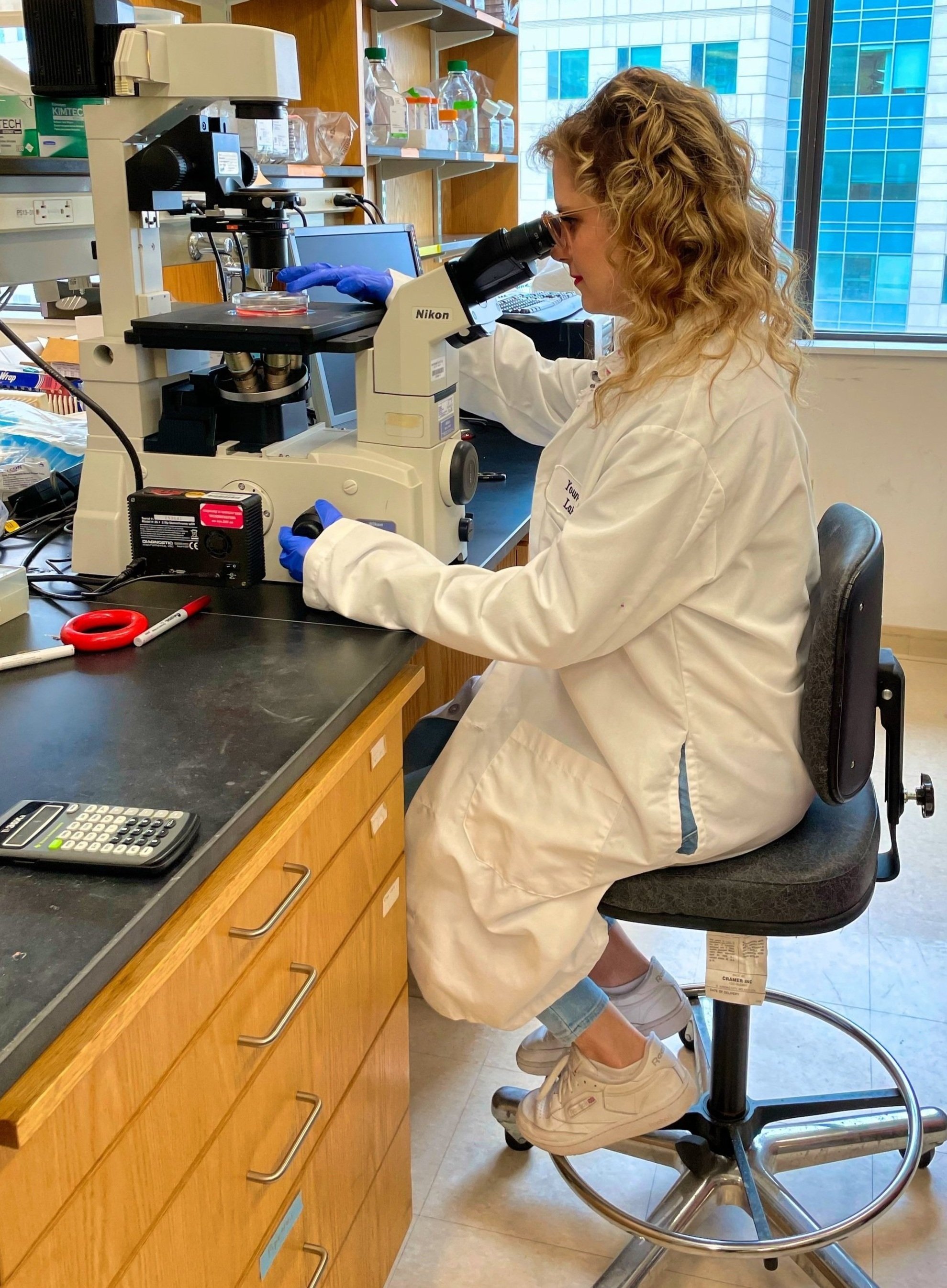
Exploring gene regulation in health and disease
We study the transcriptional and epigenetic regulation of gene expression in mammalian cells. Genetic, biochemical, microscopic and computational methods are used to investigate gene control in healthy cells and to ascertain how these controls go awry in disease. Our interests range from basic molecular mechanisms to drug discovery for cancer and other diseases caused by gene misregulation.

RESEARCH
Transcriptional condensates
We discovered that large clusters of enhancers, which we call super-enhancers, regulate genes that play the most prominent roles in cell identity (Whyte et al., 2013). Super-enhancers cooperatively assemble a high density of transcriptional apparatus to drive robust expression of genes. This high-density assembly at super-enhancers was found to exhibit sharp transitions of formation and dissolution, forming as the consequence of a single nucleation event and collapsing when concentrated factors are depleted from chromatin or when nucleation sites are deleted. These properties of super-enhancers led to our proposal that the high-density assembly of biomolecules at active super-enhancers is due to phase separation of enriched factors at these genetic elements (Hnisz et al., 2017). We recently provided experimental evidence that super-enhancers and their components do form phase-separated condensates (Sabari et al., 2018; Boija et al., 2018), establishing a new framework to account for the diverse properties described for these regulatory elements. Furthermore, we found that phosphorylation of RNA polymerase II regulates a switch between transcriptional and splicing condensates during RNA synthesis (Guo et al. 2019). Our current studies focus on the mechanisms that have evolved to regulate the behaviors of these nuclear condensates and on diseases associated with condensate dysregulation (Boija et al., 2021; Banani et al., 2022).
Whyte, W.A., Orlando, D.A., Hnisz, D., Abraham, B.J., Lin, C.Y., Kagey, M.H., Rahl, P.B., Lee, T.I., and Young, R.A. Master transcription factors and mediator establish super-enhancers at key cell identity genes. Cell 153: 307–319 (2013) PMCID: PMC3653129
Hnisz, D., Shrinivas, K., Young, R.A., Chakraborty, A.K., and Sharp, P.A. A phase separation model for transcriptional control. Cell 169:13-23 (2017) PMCID: PMC5432200
Sabari, B.R., Dall'Agnese, A., Boija, A., Klein, I.A., Coffey, E.L., Shrinivas, K., Abraham, B.J., Hannett, N.M., Zamudio, A.V., Manteiga, J.C., Li, C.H., Guo, Y.E., Day, D.S., Schuijers, J., Vasile, E., Malik, M., Hnisz, D., Lee, T.I., Cisse, I.I., Roeder, R.G., Sharp, P.A., Chakraborty, A.K., and Young, R.A. Coactivator condensation at super-enhancers links phase separation and gene control. Science, 361, eaar3958 (2018) PMCID: PMC6092193
Boija, A., Klein, I.A., Sabari, B.R., Dall'Agnese, A., Coffey, E.L., Zamudio, A.V., Li, C.H., Shrinivas, K., Manteiga, J.C., Hannett, N.M., Abraham, B.J., Afeyan, L., Guo, Y.E., Rimel, J.K., Fant, C., Schuijers, J., Lee, T.H, Taatjes, D.J., and Young, R.A. Transcription factors activate genes through the phase separation capacity of their activation domains. Cell 175:1842-1855 (2018). PMCID: PMC6295254
Guo, Y.E., Manteiga, J.C., Henninger, J.E., Sabari, B.R., Dall'Agnese, A., Hannett, N.M., Spille, J-H, Afeyan, L.K, Zamudio, A.V., Shrinivas, K., Abraham, B.J., Boija, A., Decker, T-M., Rimel, J.K., Fant, C.B., Lee, T.I., Cisse, I.I, Sharp, P.A., Taatjes, D.J., and Young, R.A. Pol II phosphorylation regulates a switch between transcriptional and splicing condensates. Nature 572:543-548 (2019). PMCID: PMC6706314
Boija, A., Klein, I.A., Young, R.A. Biomolecular condensates and cancer. Cancer Cell 39:174-192 (2021). PMCID: PMC8721577
Banani, S.F., Afeyan, L.K., Hawken, S.W., Henninger, J.E., Dall’Agnese, A., Clark, V.E., Platt, J.M., Oksuz, O., Hannett, N.M, Sagi, I., Lee, T.H., and Young, R.A. Genetic variation associated with condensate dysregulation in disease. Dev. Cell 57:1776–1788 (2022) PMCID: PMC9339523
Like pearls on a string — a new model for gene regulation
Postdocs Ann Boija, Alessandra Dall’Agnese, Isaac Klein and Ben Sabari discuss a condensate model for gene regulation.

RNA-mediated control of transcription
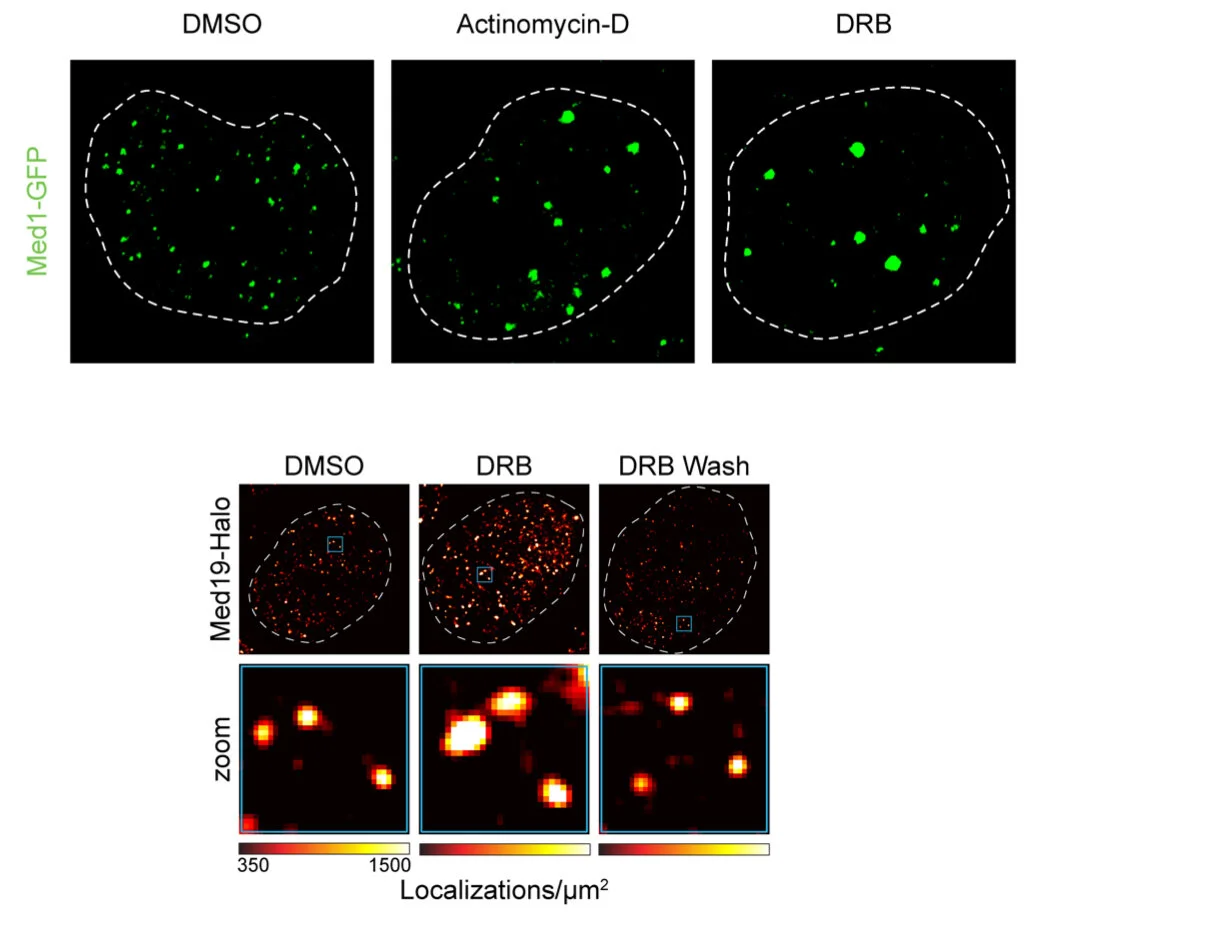
We have found that RNA transcribed from regulatory loci such as enhancers plays important roles in control of transcriptional processes (Sigova et al., 2015; Henninger et al., 2021; Sharp et al., 2022; Oksuz et al., 2023). We showed that transcription factors interact not only with their specific DNA sites and protein partners, but also with RNA sequences produced from regulatory loci (Sigova et al., 2015; Oksuz et al., 2023). Regulation of biological processes typically incorporate mechanisms that both initiate and terminate the process and, where understood, these mechanisms often involve feedback control. Regulation of transcription is a fundamental cellular process where the mechanisms involved in initiation have been studied extensively but those involved in arresting the process are poorly understood. We obtained evidence that RNAs produced during early steps in transcription initiation stimulate condensate formation whereas the burst of RNAs produced during elongation stimulate condensate dissolution, and propose that transcriptional regulation incorporates a feedback mechanism whereby transcribed RNAs initially stimulate but then ultimately arrest the process (Henninger et al., 2021; Sharp et al., 2022).
Sigova, A.A., Abraham,B.J.,Ji, X., Molinie, B., Hannett, N.M., Guo, Y.E., Jangi, M., Giallourakis, C.C, Sharp, P.A., and Young, R.A. Transcription factor trapping by RNA in gene regulatory elements. Science 350: 978-981 (2015) PMCID: PMC4720525
Henninger, J.E., Oksuz, O., Shrinivas, K., Sagi, S., LeRoy, G., Zheng, M., Andrews, J.O., Zamudio, A.V., Lazaris, C., Hannett, N.M., Lee, T.I., Sharp, P.A., Cissé, I.I., Chakraborty, A.K., Young, R.A. RNA-mediated feedback control of transcriptional condensates. Cell 184: 207-225 (2021). PMCID: PMC8128340
Sharp, P.A., Chakraborty, A.K., Henninger, J.E., and Young, R.A. RNA in formation and regulation of transcriptional condensates. RNA 28: 52-57 (2022). PMCID: PMC8675292
Oksuz, O., Henninger, J. E., Warneford-Thomson, R., Zheng, M. M., Erb, H., Overholt, K. J., Hawken, S. W., Banani, S. F., Lauman, R., Vancura, A., Robertson, A. L., Hannett, N. M., Lee, T. I., Zon, L. I., Bonasio, R., Young, R. A. Transcription factors interact with RNA to regulate genes. Mol Cell, July 3 (2023) PMCID: PMC10529847.
RNA-mediated feedback control of transcriptional condensates
Jon Henninger, Ozgur Oksuz and Krishna Shrinivas discuss how RNA functions as a feedback regulator of transcriptional condensates.
Drug partitioning in condensates
Our studies of super-enhancers and their associated biomolecular condensates have led to new approaches to anti-cancer drugs. We found that tumor cells acquire large super-enhancers at driver oncogenes and that these can be unusually vulnerable to certain transcriptional inhibitors (Lovén et al., 2013; Kwiatowski et al., 2014). These oncogenic super-enhancers can encompass exceptionally large domains, sometimes spanning more than 200 kb, and are highly vulnerable to transcriptional inhibitors that target BRD4 and CDK7. Normal cells appear to be relatively insensitive to inhibitors that target BRD4 and CDK7, suggesting that transcriptional inhibitors of this type may be useful for cancer therapy (Bradner et al., 2017). The vulnerability of large oncogenic super-enhancers may be due to the selective concentration of drugs in super-enhancer condensates at oncogenes (Klein et al., 2020). We are now investigating how specific functional groups in small molecules provide drugs with the ability to concentrate within specific compartments in cells (Kilgore and Young, 2022; Kilgore et al., 2023).
Lovén, J., Hoke, H.A., Lin, C.Y., Lau, A., Orlando, D.A., Vakoc, C.R., Bradner, J.E., Lee, T.I. and Young, R.A. Selective inhibition of tumor oncogenes by disruption of super-enhancers. Cell: 153: 320-334 (2013) PMCID: PMC3760967
Kwiatkowski, N., Zhang, T., Rahl, P.B., Abraham, B., Reddy, J., Ficarro, S., Dastur, A., Amzallag, A., Ramaswamy, S., Tesar, B., Jenkins, C.R., Hannett, N., McMillin, D., Sanda, T., Sim, T., Kim, N.D., Look, T., Mitsiades, C., Weng, A.P., Brown, J.R., Benes, C.H., Marto, J., Young, R.A., and Gray, N.S. Targeting transcription regulation in cancer with a covalent CDK7 inhibitor. Nature 511: 616-620 (2014) PMCID: PMC4244910
Bradner, J.E., Hnisz, D. and Young, R.A. Transcriptional addiction in cancer. Cell 168:629-643 (2017) PMCID: PMC5308559
Klein, I.A., Boija, A., Afeyan, L.K., Hawken, S.W., Fan, M., Dall'Agnese, A., Oksuz, O., Henninger, J.E., Shrinivas, K., Sabari, B.R., Sagi, I., Clark, V.E., Platt, J.M., Kar, M., McCall, P.M., Zamudio, A.V., Manteiga, J.C., Coffey, E.L., Li, C.H., Hannett, N.M., Guo, Y.E., Decker, T.-M., Lee, T.I., Zhang, T., Weng, J.K., Taatjes, D.J., Chakraborty, A., Sharp, P.A., Chang, Y.-T., Hyman, A.A., Gray, N.S., Young, R.A. Partitioning of cancer therapeutics in nuclear condensates. Science 368: 1386–1392 (2020). PMCID: PMC7735713
Kilgore, H.R. and Young, R.A. Learning the chemical grammar of biomolecular condensates. Nat Chem Biol 18: 1298–1306 (2022), https://doi.org/10.1038/s41589-022-01046-y. PMCID: PMC9691472
Kilgore, H.K., Mikhael, P.G., Overholt, K.G., Boija, A., Hannett, N., van Dongen, C., Lee, T.I., Chang, Y.-T. Barzilay, R., Young, R.A. Condensates create distinct chemical environments that influence intracellular distributions of molecules. Nature Chem Biol, https:doi.org/10.1038/s41589-023-01432-0 (2023).
Drug partitioning in condensates
Postdocs Isaac Klein and Ann Boija discuss their discovery that cancer therapeutics selectively partition in nuclear condensates.


Chromosome structure and gene regulation
Our studies have revealed roles for specific chromosome structures in regulation of gene expression in healthy cells and in cancer. We found that DNA loops between the enhancers and core promoters of active genes are formed and maintained by Mediator and cohesin in mammalian cells (Kagey et al., 2010). Genome-wide maps of enhancer-promoter interactions in mammalian cells led to the discovery that super-enhancer driven genes occur in “insulated neighborhoods”, where large DNA loops that are co-bound by cohesin and CTCF serve to maintain proper expression of genes within and outside of the loop (Dowen et al., 2014). In cancer, disruption of these regulatory chromosome structures occurs at driver oncogenes and contributes to their dysregulation (Hnisz et al., 2016). We also discovered that the transcription factor YY1 contributes to enhancer-promoter interactions by forming multimers analogous to the CTCF-CTCF interactions that contribute to chromosome neighborhoods (Weintraub et al., 2017). These studies provide a foundation for our current studies of the relationships between chromosome structure and gene control in development and disease (Dall'Agnese and Young, 2023).
Kagey, M.H., Newman, J.J, Bilodeau, S., Zhan, Y., van Berkum, N.L., Orlando, D.A., Ebmeier, C.C., Goossens, J., Rahl, P., Levine, S., Taatjes, D.J., Dekker, J. and Young, R.A. Mediator and cohesin connect gene expression and chromatin architecture. Nature 467: 430-435 (2010) PMCID: PMC2953795
Dowen, J.M., Fan, Z.P., Hnisz, D., Ren, G., Abraham, B.J., Zhang, L., Weintraub, A.S., Schujiers, J., Lee, T.I., Zhao, K. and Young, R.A. Control of cell identity genes occurs in insulated neighborhoods in mammalian chromosomes. Cell 159: 374–387 (2014) PMCID: PMC4197132
Hnisz, D., Weintraub, A.S, Day, D.S., Valton, A.-L., Bak, R.O., Li, C.H., Goldmann, J., Lajoie, B.R., Fan, Z.P, Sigova, A.A., Reddy, J., Borges-Rivera, D., Lee, T.I., Jaenisch, R., Porteus, M.H., Dekker, J., and Young, R.A. Activation of proto-oncogenes by disruption of chromosome neighborhoods. Science 351: 1454-1458 (2016) PMCID: PMC4884612
Weintraub, A.S., Li, C.H., Zamudio, A.V., Sigova, A.A., Hannett, N.M., Day, D.S., Abraham, B.J., Cohen, M.A., Nabet, B., Buckley, D.L., Guo, Y.E., Hnisz, D., Jaenisch, R., Bradner, J.E., Gray, N.S., and Young, R.A. YY1 is a structural regulator of enhancer-promoter loops. Cell 171:1573-1588 (2017) PMCID: PMC5785279
Dall’Agnese, A. and Young, R.A. Regulatory architecture of cell identity genes and housekeeping genes. Trends Cell Biol, DOI:https://doi.org/10.1016/j.tcb.2023.08.007 (2023)

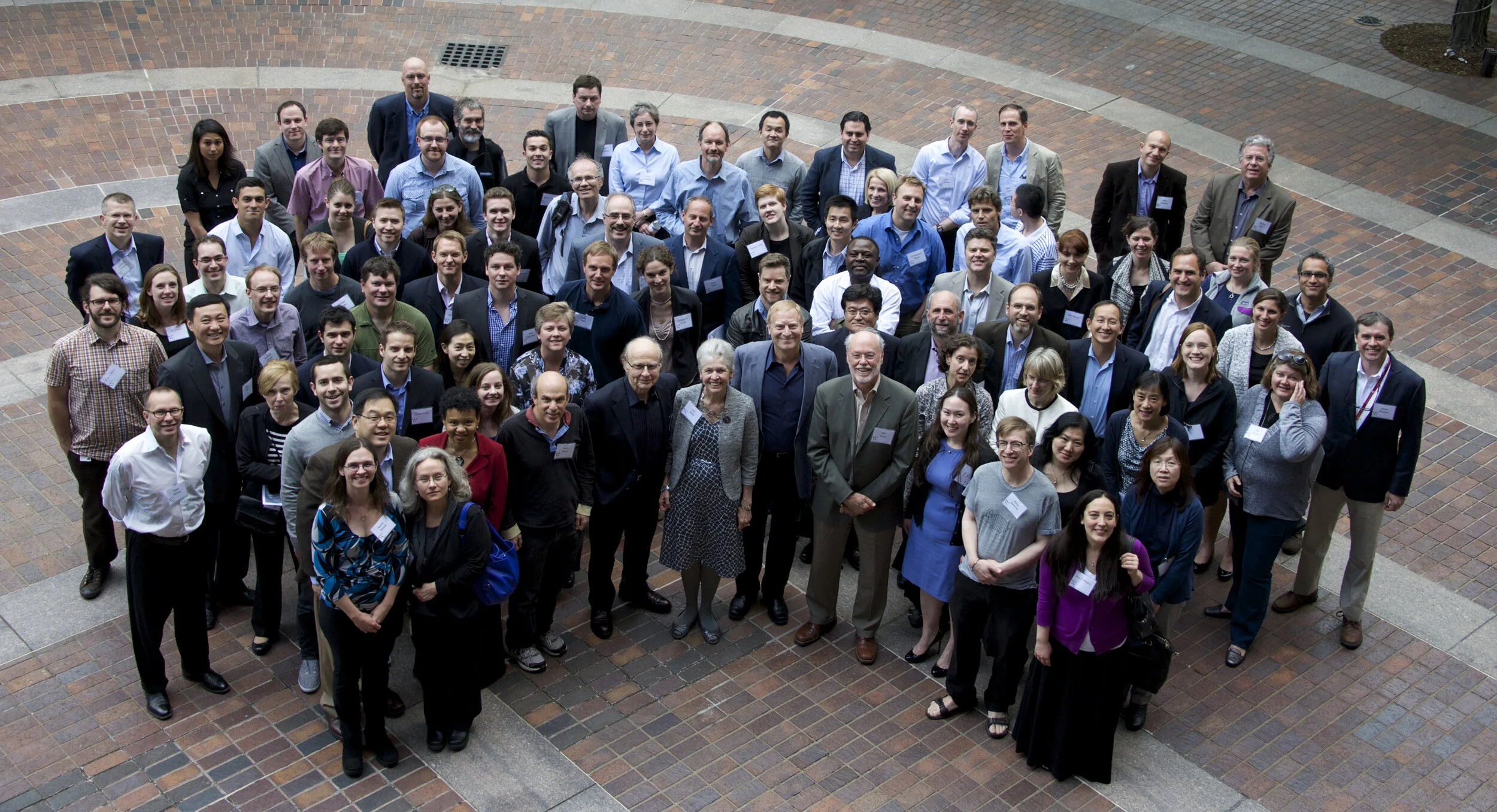
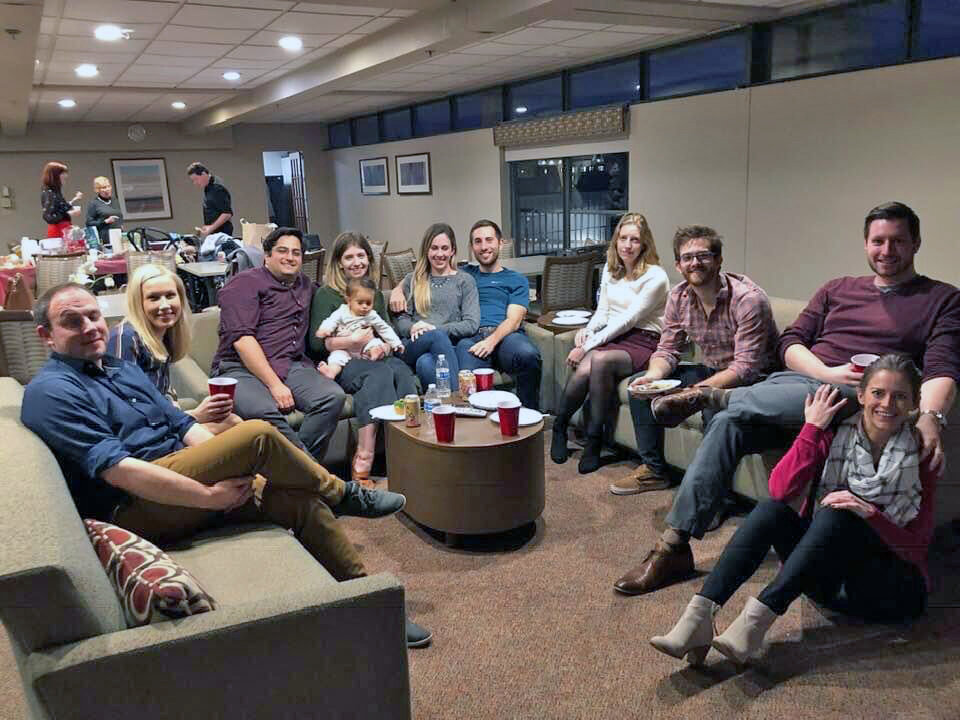
We are scientists with diverse backgrounds and affiliations that bring rich experience to our laboratory and community. Our collective training is in basic biology, chemistry, physics, computing and medicine. Our physician-scientists represent multiple clinical specialties, conduct clinical care in each of Boston’s major hospitals and contribute to our passion for basic science that may ultimately advance patient care. We have valuable collaborations with many other talented scientists. We strive to contribute to our community and advance a new generation of scientific leaders.
Postdoctoral Associates and Fellows

Salman Banani

Victoria Clark

Alessandra Dall’agnese

Michael Gallagher

Jon Henninger

Henry Kilgore

Jesse Platt

Ido Sagi

Adrienne Vancura

Hao-Che Wang
Graduate Students

Shannon Moreno
Kalon Overholt

Alejandra Ramos

Susana Wilson-Hawken

Ming Zheng
Undergraduate Students

Alyssa Blaise

Monique Armelle Dacanay
Technical Assistants

Hailey Erb

Catherine Van Dongen

Richard A. Young, Principal Investigator
Tony Lee, Research Scientist

Mary Anne Donovan Administrative Lab Assistant

Nancy M. Hannett, Technical Associate









SELECTED PEER-REVIEWED PUBLICATIONS
Dall’Agnese, A. and Young, R.A. Regulatory architecture of cell identity genes and housekeeping genes. Trends Cell Biol, (2023). DOI:https://doi.org/10.1016/j.tcb.2023.08.007
Kilgore, H.K., Mikhael, P.G., Overholt, K.G., Boija, A., Hannett, N., van Dongen, C., Lee, T.I., Chang, Y.-T. Barzilay, R., Young, R.A. Condensates create distinct chemical environments that influence intracellular distributions of molecules. Nature Chem Biol, (2023). https:doi.org/10.1038/s41589-023-01432-0
Oksuz, O., Henninger, J. E., Warneford-Thomson, R., Zheng, M. M., Erb, H., Overholt, K. J., Hawken, S. W., Banani, S. F., Lauman, R., Vancura, A., Robertson, A. L., Hannett, N. M., Lee, T. I., Zon, L. I., Bonasio, R., Young, R. A. Transcription factors interact with RNA to regulate genes. Mol Cell, July 3 (2023). PMCID: PMC10529847.
Kilgore, H.R. and Young, R.A. Learning the chemical grammar of biomolecular condensates. Nat Chem Biol 18: 1298–1306 (2022). https://doi.org/10.1038/s41589-022-01046-y. PMCID: PMC9691472
Sharp, P.A., Chakraborty, A.K., Henninger, J.E., and Young, R.A. RNA in formation and regulation of transcriptional condensates. RNA 28: 52-57 (2022). PMCID: PMC8675292
Banani, S.F., Afeyan, L.K., Hawken, S.W., Henninger, J.E., Dall’Agnese, A., Clark, V.E., Platt, J.M., Oksuz, O., Hannett, N.M, Sagi, I., Lee, T.H., and Young, R.A. Genetic variation associated with condensate dysregulation in disease. Dev. Cell (2022) Jul 5:S1534-5807(22)00450-6. DOI: 10.1016/j.devcel.2022.06.010. PMID: 35809564. Catalog of pathogenic mutations associated with condensate dysregulation.
Henninger, J.E., Oksuz, O., Shrinivas, K., Sagi, I., LeRoy, G., Zheng, M., Andrews, J.O., Zamudio, A.V., Lazaris, C., Hannett, N.M., Lee, T.I., Sharp, P.A., Cissé, I.I., Chakraborty, A.K., Young, R.A. RNA-mediated feedback control of transcriptional condensates. Cell 184: 207-225 (2021). PMCID: PMC8128340
Li, C.H., Coffey, E.L., Dall’Agnese, A., Hannett, N.M., Tang, X., Henninger, J.E., Platt, J.M., Oksuz, O., Zamudio, A.V., Afeyan, L.K., Schuijers, J., Liu, X.S., Markoulaki, S., Lungjangwa, T., LeRoy, G., Svoboda, D.S., Wogram, E., Lee, T.H., Jaenisch, R., Young, R.A. MeCP2 links heterochromatin condensates and neurodevelopmental disease. Nature 586: 440–444 (2020). PMCID: PMC7735819
Klein, I.A., Boija, A., Afeyan, L.K., Hawken, S.W., Fan, M., Dall'Agnese, A., Oksuz, O., Henninger, J.E., Shrinivas, K., Sabari, B.R., Sagi, I., Clark, V.E., Platt, J.M., Kar, M., McCall, P.M., Zamudio, A.V., Manteiga, J.C., Coffey, E.L., Li, C.H., Hannett, N.M., Guo, Y.E., Decker, T.-M., Lee, T.I., Zhang, T., Weng, J.K., Taatjes, D.J., Chakraborty, A., Sharp, P.A., Chang, Y.-T., Hyman, A.A., Gray, N.S., Young, R.A. Partitioning of cancer therapeutics in nuclear condensates. Science 368: 1386–1392 (2020). PMCID: PMC7735713
Guo, Y.E., Manteiga, J.C., Henninger, J.E., Sabari, B.R., Dall'Agnese, A., Hannett, N.M., Spille, J-H, Afeyan, L.K, Zamudio, A.V., Shrinivas, K., Abraham, B.J., Boija, A., Decker, T-M., Rimel, J.K., Fant, C.B., Lee, T.I., Cisse, I.I, Sharp, P.A., Taatjes, D.J., and Young, R.A. Pol II phosphorylation regulates a switch between transcriptional and splicing condensates. Nature 572:543-548 (2019). PMCID: PMC6706314
Zamudio. A.V., Dall’Agnese, A., Henninger, J.E., Manteiga, J.C., Afeyan, L.K., Hannett, N.M., Coffey, E.L., Li, C.H., Oksuz, O., Sabari, B.R., Boija, A., Klein, I.A., Hawken, S.W., Spille, J.-H., Decker, T.-M., Cisse, I.I., Abraham, B.J., Lee, T.I., Taatjes, D.J., Schuijers, J., Young, R.A. Mediator condensates localize signaling factors to key cell identity genes. Mol Cell 76:753-766 (2019). PMCID: PMC6898777
Boija, A., Klein, I.A., Sabari, B.R., Dall'Agnese, A., Coffey, E.L., Zamudio, A.V., Li, C.H., Shrinivas, K., Manteiga, J.C., Hannett, N.M., Abraham, B.J., Afeyan, L., Guo, Y.E., Rimel, J.K., Fant, C., Schuijers, J., Lee, T.H, Taatjes, D.J., and Young, R.A. Transcription factors activate genes through the phase separation capacity of their activation domains. Cell 175:1842-1855 (2018). PMCID: PMC6295254
Hnisz, D., Schuijers, J., Li, C.H., and Young, R.A. Regulation and dysregulation of chromosome structure in cancer. Ann Rev Cancer Biol. 2:21-40 (2018). Sabari, B.R., Dall'Agnese, A., Boija, A., Klein, I.A., Coffey, E.L., Shrinivas, K., Abraham, B.J., Hannett, N.M., Zamudio, A.V., Manteiga, J.C., Li, C.H., Guo, Y.E., Day, D.S., Schuijers, J., Vasile, E., Malik, M., Hnisz, D., Lee, T.I., Cisse, I.I., Roeder, R.G., Sharp, P.A., Chakraborty, A.K., and Young, R.A. Coactivator condensation at super-enhancers links phase separation and gene control. Science, 361, eaar3958 (2018). PMCID: PMC6092193
Schuijers, J., Manteiga, J.C., Weintraub, A.S., Day, D.S., Zamudio, A.V., Hnisz, D., Lee, T.I., and Young, R.A. Transcriptional dysregulation of MYC reveals common enhancer-docking mechanism. Cell Reports 23:349-360 (2018). PMCID: PMC5929158 Bradner, J.E., Hnisz, D. and Young, R.A. Transcriptional addiction in cancer. Cell 168:629-643 (2017) PMCID: PMC5308559
Hnisz, D., Shrinivas, K., Young, R.A., Chakraborty, A.K., and Sharp, P.A. A phase separation model for transcriptional control. Cell 169:13-23 (2017). PMCID: PMC5432200
Weintraub, A.S., Li, C.H., Zamudio, A.V., Sigova, A.A., Hannett, N.M., Day, D.S., Abraham, B.J., Cohen, M.A., Nabet, B., Buckley, D.L., Guo, Y.E., Hnisz, D., Jaenisch, R., Bradner, J.E., Gray, N.S., and Young, R.A. YY1 is a structural regulator of enhancer-promoter loops. Cell 171:1573-1588 (2017). PMCID: PMC5785279
Hnisz, D., Day, D.S. and Young, R.A. Insulated neighborhoods: structural and functional units of mammalian gene control. Cell 167:1188-1200 (2016). PMCID: PMC5125522 Sigova, A.A., Abraham,B.J.,Ji, X., Molinie, B., Hannett, N.M., Guo, Y.E., Jangi, M., Giallourakis, C.C, Sharp, P.A., and Young, R.A. Transcription factor trapping by RNA in gene regulatory elements. Science 350: 978-981 (2015) PMCID: PMC4720525
Wang, Y., Zhang, T., Kwiatkowski, N., Abraham, B.J., Ihn Lee, T., Xie, S., Yuzugullu, H., Von,T., Li, H., Lin, Z., Stover, D.G., Lim, E., Wang, Z.C., Iglehart , J.D., Young, R.A., Gray, N.S., and Zhao, J.J. CDK7-dependent Transcriptional Addiction in Triple-Negative Breast Cancer. Cell 163: 174–186 (2015). PMCID: PMC4583659
Kwiatkowski, N., Zhang, T., Rahl, P.B., Abraham, B., Reddy, J., Ficarro, S., Dastur, A., Amzallag, A., Ramaswamy, S., Tesar, B., Jenkins, C.R., Hannett, N., McMillin, D., Sanda, T., Sim, T., Kim, N.D., Look, T., Mitsiades, C., Weng, A.P., Brown, J.R., Benes, C.H., Marto, J., Young, R.A., and Gray, N.S. Targeting transcription regulation in cancer with a covalent CDK7 inhibitor. Nature 511: 616-620 (2014). PMCID: PMC4244910
Hnisz, D., Abraham, B.J., Lau A, Saint-André, V., Sigova, A.A., Hoke, H.A., Lee, T.I., and Young, R.A. Super-enhancers in the control of cell identity and disease. Cell 155: 934-947 (2013). PMCID: PMC3841062 Whyte, W.A., Orlando, D.A., Hnisz, D., Abraham, B.J., Lin, C.Y., Kagey, M.H., Rahl, P.B., Lee, T.I., and Young, R.A. Master transcription factors and mediator establish super-enhancers at key cell identity genes. Cell 153: 307–319 (2013) PMCID: PMC3653129

LAB NEWS
MACHINE LEARNING HELPS PREDICT DRUGS’ FAVORITE SUBCELLULAR HAUNTS by Greta Friar. Whitehead Institute, September 27, 2023. (Henry Kilgore, Kalon Overholt, Richard Young)
IT TAKES THREE TO TANGO: TRANSCRIPTION FACTORS BIND DNA, PROTEIN, AND RNA by Greta Friar. Whitehead Institute, June 30, 2023. (Ozgur Oksuz, Jonathan Henninger, Richard Young)
THE CORONAVIRUS UNVEILED by Carl Zimmer. The New York Times, October 9, 2020. (Eliot Coffey, Richard Young)
COVID-19 SCIENTIFIC LEADERS SHARE EXPERTISE IN NEW MIT CLASS by Greta Friar. Whitehead Institute, September 8, 2020. (Richard Young)
BRIDGING RESEARCH AND MEDICINE: WHITEHEAD INSTITUTE’S PHYSICIAN-SCIENTISTS by Greta Friar. Whitehead Institute, August 12, 2020. (Victoria Clark, Isaac Klein)
PROTEINS — AND LABS — COMING TOGETHER TO PREVENT RETT SYNDROME. by Greta Friar. Whitehead Institute, August 12, 2020. (Charles Li, Eliot Coffey, Richard Young)
DISCOVERY OF HOW CANCER DRUGS FIND THEIR TARGETS COULD LEAD TO A NEW TOOLSET FOR DRUG DEVELOPMENT. (Ann Boija, Isaac Klein, Richard Young)
WHITEHEAD INSTITUTE MEMBER RICHARD YOUNG ELECTED TO NATIONAL ACADEMY OF MEDICINE by Merrill Meadow. Whitehead Institute, October 21, 2019.
Whitehead Research Highlights features Alicia Zamudio’s work on how signaling factors reach their targets.

A Conversation with Richard Young
MEETINGS
Cold Spring Harbor Laboratory, “Epigenetics & Chromatin”, September 18, 2020.
Richard Young, “Nuclear Condensates in Gene Regulation and Disease Pathology”
Cold Spring Harbor Laboratory, “Regulatory & Noncoding RNAs”, May 12 - 15, 2020.
Ozgur Oksuz, “RNA-mediated Feedback Control of Transcriptional Condensates”
2nd Epigenetics Conference, “From Mechanisms to Disease”, Feb. 28 – Mar 2, 2020.
Ann Boija, “Partitioning of Cancer Therapeutics in Nuclear Condensates”
European Region Action Scheme Seminar, 2020.
Alessandra Dall’agnese, “Transcriptional and Nuclear Condensates”
Cell Symposia, “Transcriptional Regulation in Evolution, Development, and Disease” , Oct. 20 – 22, 2019.
Ann Bioja, “Differential partitioning of cancer therapeutics in nuclear condensates”
Cold Spring Harbor Laboratory, “Mechanisms of Eukaryotic Transcription”, Aug. 27 - 31, 2019.
Ann Bioja, “Transcriptional Regulation, Development and Disease”
Federation of American Societies for Experimental Biology Conference,
"Transcription, Chromatin & Epigenetics", Sept. 16 - 21, 2018.
Alessandra Dall’agnese, “Phase Separation in Transcriptional Control”
EMBL Conference, “Transcription and Chromatin”, Aug. 25 – 28, 2018.
Ann Bioja, “Transcription Factors Activate Genes Through the Phase Separation Capacity of Their Activation Domains”
Cold Spring Harbor Laboratory, “Regulatory & Noncoding RNAs”, 2018.
Alessandra Dall’agnese, “Phase Separation in Transcriptional Control”
Keystone Symposia, “Gene Control in Development and Disease”, Mar. 23 – 27, 2018.
Charles Li, “YY1 Is a Structural Regulator of Enhancer-Promoter Loops”
Brian Abraham (St. Jude)
Suzanne Baker (St. Jude)
Regina Barzilay (MIT)
Arup Chakraborty (MIT)
Ibrahim Cissé (MIT)
Nathanael Gray (Harvard)
Linda Griffith (MIT)
Anthony Hyman (Max Plank Institute)
Tommi Jaakkola (MIT)
Rudolf Jaenisch (Whitehead/MIT)
Jacob Jeppesen (Novo Nordisk)
Thomas Look (Harvard)
Nikhil Munshi (Harvard)
Wendy Salmon (Whitehead)
Phillip A. Sharp (MIT)
Kimberly Stegmaier (Harvard)
Zuzana Tothova (Harvard)
Tom Volkert (Whitehead)
Seychelle Vos (MIT)
Jing-Ke Weng (Whitehead/MIT)
Kwok-Kin Wong (NYU)
Jinghui Zhang (St. Jude)
Leonard Zon (Harvard)
Thomas Zwaka (NYU)

COLLABORATORS

Rudolf Jaenisch and Richard Young, TabulaSynthase, Whitehead Institute blog